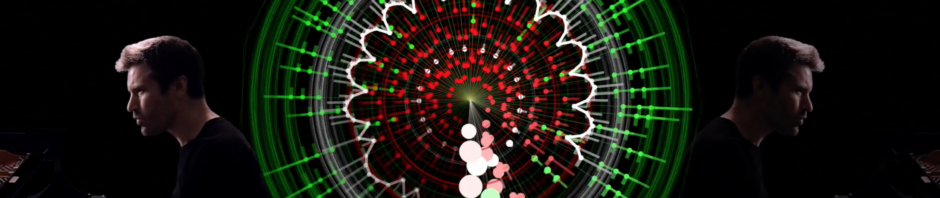
Natural Machines 2.0 at Carnegie Hall — Program Notes

On November 15th 2025, I brought my brand-new project Natural Machines 2.0 to Carnegie Hall. The performance featured The Knights orchestra and special guests Becca Stevens and Miguel Zenon. The house was full; it was the thrill of a lifetime. I’m particularly grateful to the many friends who came, some from a great distance. Below are my program notes for the concert, along with a technical note diving deeper into how the project functions behind the scenes.
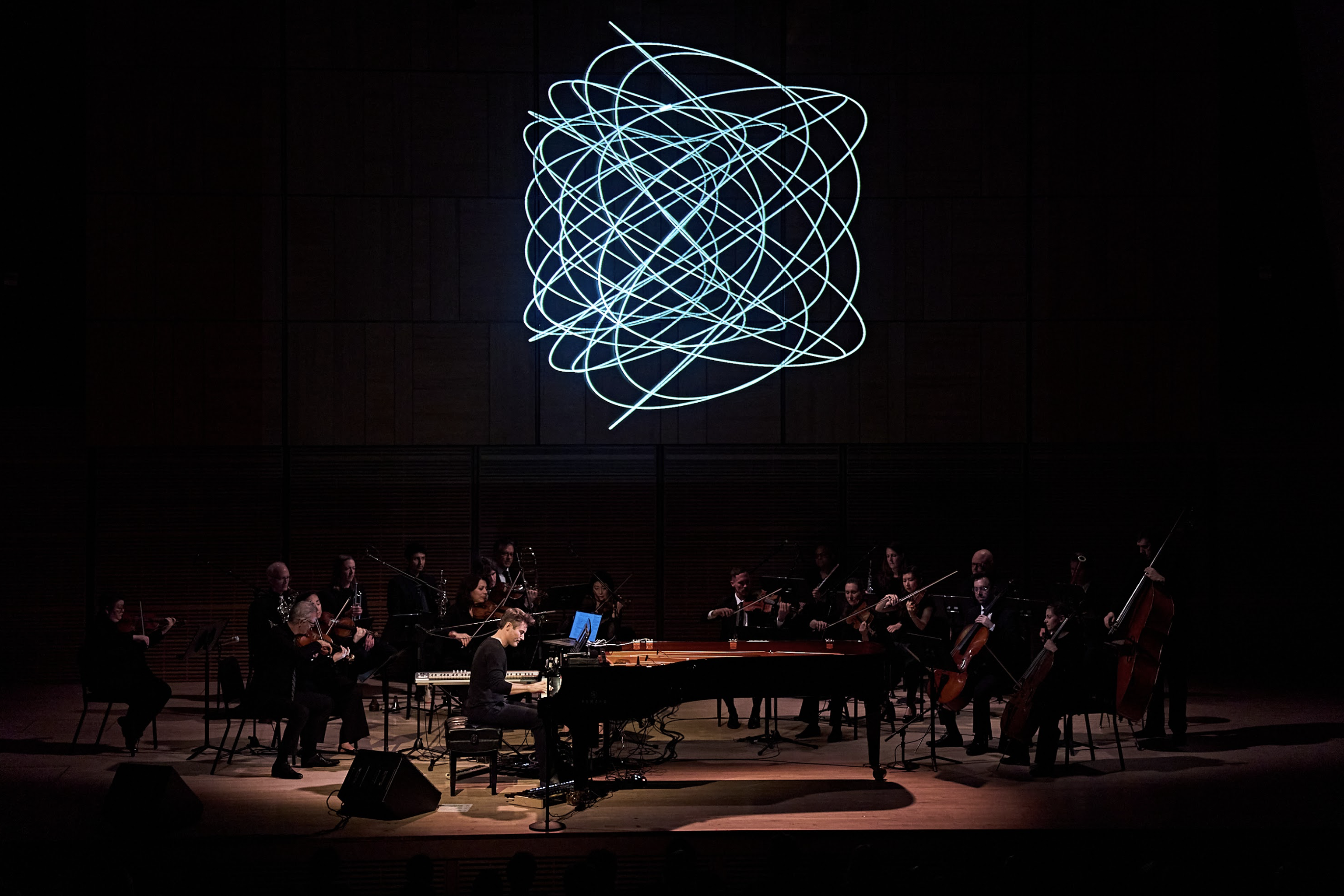
Photograph by Rob Davidson

In the Artist’s Own Words

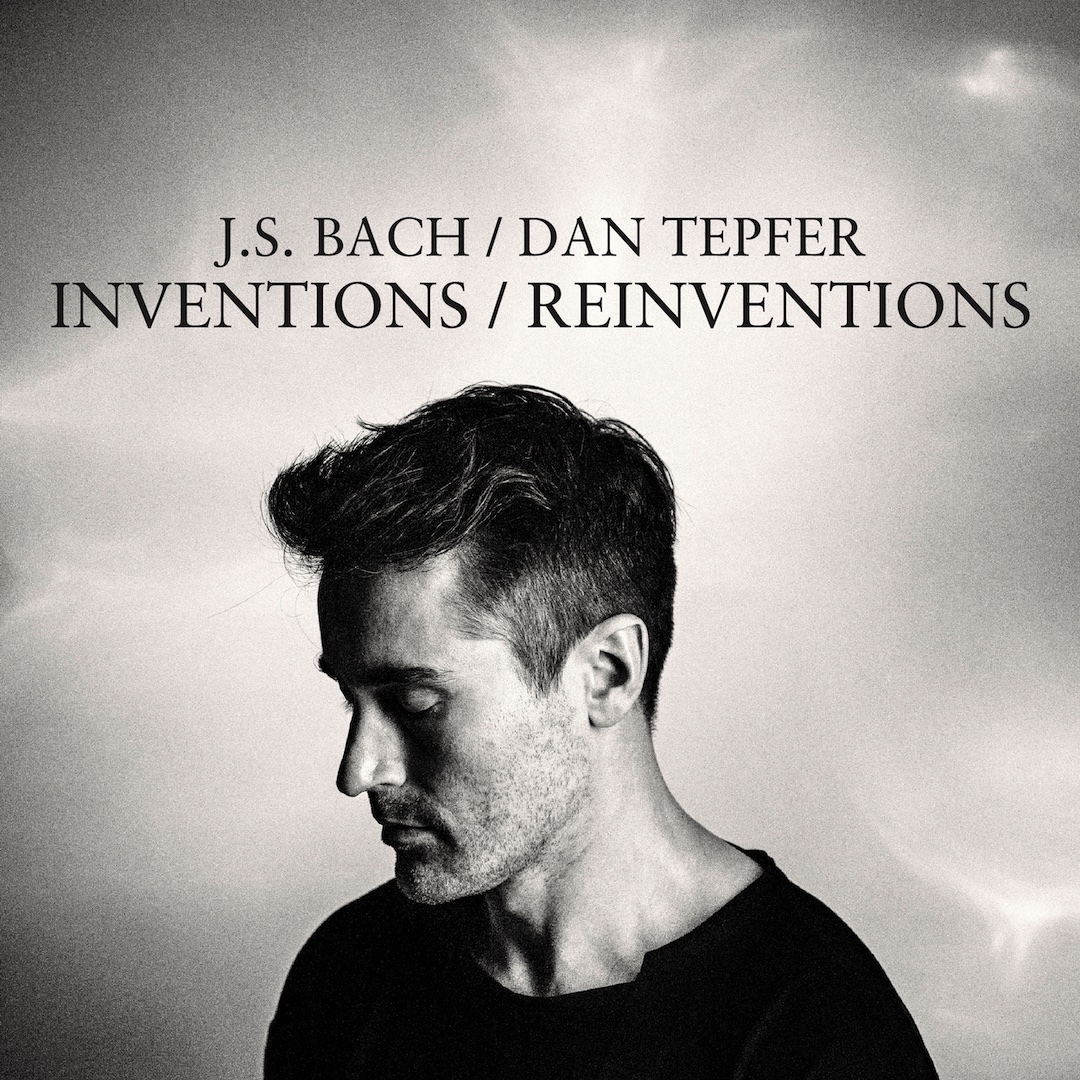
For as long as I can remember, I’ve been fascinated by the idea of free improvisation: that it’s possible to create an entire piece of music, never-before heard, in the moment, out of nothing. Growing up as a jazz pianist, I learned to improvise over pre-determined harmonic progressions, but I yearned for a greater freedom: not only to improvise within a given structure, but to improvise the structure itself. As an adult, I’ve slowly learned the discipline necessary to doing this in a way that feels meaningful — alone at the piano (on my recent album Inventions / Reinventions, for example) or with a big-eared collaborator (Lee Konitz, memorably). But it’s only recently that I’ve begun to wonder: what could free improvisation look like with an orchestra?

In 2010, I composed my first piano concerto, and left substantial room for improvisation in the piano part. The orchestra parts, however, were written out in the conventional way. At the same time, I began to bring my childhood love of computer programming into my music. I wrote algorithms — systems of musical rules — which could improvise with me in real time, expressing themselves acoustically through the Yamaha Disklavier player piano. This led to my 2019 album Natural Machines, where I explore the intersection of natural (intuitive, emotional) and mechanical (logical, rule-based) processes in music, doing free improvisation with an algorithm as creative partner. 

It’s worth remembering that many of the greatest musical minds were just as concerned with the rules that structured their music as with the emotion that made it soar. This is certainly true of Bach, and also of John Coltrane. I believe it’s when these two great forces meet — the algorithmic and the spiritual — that art is at its strongest.

In 2022, the Eugene Symphony approached me about writing a new piano concerto. I imagined composing in the conventional way at first. Then the symphony’s conductor, Francesco Lecce-Chong, suggested I incorporate elements from Natural Machines, in particular the live visual representations of the music I’d created. 

Over the last three years, this idea slowly percolated in me — of striking some balance between traditional notation and computer-augmented free improvisation. Then, in mid 2024, on the tail end of two large conventional composition projects, I suddenly felt like doing something radical: what if the entire orchestra, along with myself as the soloist, could enter the stage not knowing what was going to happen? What if we created the music together, in the moment? Wouldn’t that be exciting?

I devised a way to send musical notation in real-time to each member of the orchestra, on mobile devices they could easily set on their music stands. I started to think about the piano somewhat like an organ, with the ability to pull organ stops (or their digital equivalent on my iPad) to select different collections of sounds. I designed and built a system of foot pedals that enabled me to use my feet as much as my hands. I’ve personally labored over every line of code — from the ones that create the network of devices to those responsible for the real-time visuals — just as much as I’ve labored in the past over the individual notes of a composition.

The difference here, of course, is that every time this “piece” — or this process for a piece — is performed, it will sound different. Yet, there is a theme that will carry through the evening: the notion of harmony, in its broadest sense, from the delicious interactions of sound frequencies to the relative motions of orbiting planets, and perhaps most of all, to the hope that we — along with the orchestra, taken as a microcosm for society — may live in spontaneous, harmonious balance with one another. 


Technical note

By character, I’ve always liked to approach problems from the ground up. There’s something about being present in every aspect of how something works, from the smallest details to the overall structure, that feels right to me. For Natural Machines 2.0, I’ve taken this approach as far as I ever have, building my own gear, custom code libraries, and even learning to create my own integrated circuits. 

Thankfully, I didn’t have to create the instrument at the heart of it all. I’m performing on a Yamaha Disklavier CFX, a real acoustic piano that communicates every key and pedal movement to my computer via MIDI, and which has the magical ability to play by itself. The Disklavier allows me to play naturally while the computer listens, analyzing and responding to my playing with both visuals and sound. In Natural Machines 1.0, the computer expressed itself by playing the same piano I play; in 2.0, it can also play the orchestra.

To control the many layers of the system while performing, I built several interfaces. Beneath the piano keyboard, to the right, sits an adapted organ pedalboard with MIDI output. This pedalboard doesn’t only play notes: each pedal has a small display above it that shows its current function, for example “↑ m3” if that pedal transposes a musical voice up a minor third. The functions of the pedals can change depending on context, and the displays update dynamically as the computer sends them new instructions. 

On the floor to my left sits an array of twelve pedals, each with its own display and all connected to a microcontroller that communicates pedal presses to the computer via MIDI. These pedals can trigger all kinds of real-time transformations: switching instrument assignments, changing articulations, freezing loops: anything you can imagine. The device also supports expression pedals that continuously transmit data, allowing me to shape parameters fluidly with my feet while keeping both hands on the piano. I designed and had manufactured the integrated circuits in green, and couldn’t resist decorating them with stencils of my TriadSculptures.

Two iPads complete the control setup. The first functions as an instrument selector, akin to the stops used by organists. At any given moment, the music I play or which my algorithms generate can be routed to any of eight “voices” — conceptual layers within the music — and each voice can be assigned to one or more orchestral instruments. The iPad lets me choose which instruments are active in the current voice, and its layout can change when the musical algorithm changes to offer context-specific controls.

The second iPad lets me shape dynamics and other performance parameters in real time. Here I can limit or expand the volume range of each voice, trigger or stop loops, and split the piano so that only a portion of the keyboard feeds data to the computer. This iPad also lets me choose the current visual mode, altering how the music is represented on the projection screen.

What to do with all this input? At the center of the system is a laptop running three programs. The first, written in SuperCollider, acts as the central brain of the project. It receives data from all the input devices — the Disklavier, the pedalboards, the iPads, microphones — and processes that information to generate musical output, organized into independent voices. Each voice carries notes, dynamics, and articulations, as well as its own selection of orchestral instruments. This musical data gets sent out from SuperCollider to be represented and played.

The second program, written in Processing, translates the musical data into real-time visuals, to be projected on a screen behind the musicians. It receives information from SuperCollider via the OSC protocol, and displays the notes played by the orchestra and myself, with each voice represented visually in distinct and expressive ways. The projection system must be low-latency so that the imagery, which is so intimately linked to the notes being played, feels organically connected to the sound.

The third program, written in JavaScript, serves a web interface to each orchestral musician over a closed network, created with a specialized Wi-Fi router of the kind used by hotels and airports. Every player connects their phone or tablet to the network, opens a browser, and visits a local website. There, they select their instrument, and a notation display appears. The page shows a traditional five-line staff, automatically switching clefs for multi-clef instruments like cello or bassoon, and applying appropriate transpositions for instruments like French horn or clarinet. When I send commands to the JavaScript program from SuperCollider, notes, dynamics, and articulations specific to this instrument appear on the staff for the musician to play.

In this way, every musician receives live notation generated by what I’m playing at the piano and the algorithms I’ve designed, while the audience sees a parallel visual interpretation projected above the stage. 

It’s all a genuinely wild experiment — the fruit of some crazy dream. The notion of being able to improvise with an orchestra seemed irresistible to me, and I couldn’t exactly tell you why. I simply felt compelled to venture down this road, to see what was possible. I thank you, and the musicians with me on stage tonight, for coming along for the ride. 

Posted in Music | Leave a comment

A Conversation with Thomas Morgan

Had a lovely conversation with the great Thomas Morgan around his beautiful new album, Around You Is a Forest, which includes an algorithmic instrument he created called WOODS. Thomas and I share a love for improvisation and programming, and we’ve made two albums together, so this was a lot of fun.

Posted in Music | Leave a comment

How A.I. Turns Perfection on its Head

At the Village Vanguard, years ago, I made the following observation: jazz musicians used to wear sunglasses indoors in order to hide their bloodshot eyes, caused by taking heroin. Nowadays, jazz musicians wear sunglasses indoors to hide the fact that their eyes are not bloodshot and that they are not taking heroin.

There’s a corollary, albeit distant, between this joke and what A.I. is doing to our communication. It used to be that one would proofread a letter or an email before sending, in the understanding that a well-written, typo-free message showed care on the part of the writer towards the reader. Receiving a well-written note felt like a gift — someone had taken the time to make themselves understood to us in the clearest way they could.

Now, with people more and more frequently using A.I. to write their emails, their papers, even their books, we may be entering a phase where the greatest sign of care, on receiving a message, may be in typos, awkward turns of phrase, and other imperfections that indicate that the writer took the time to write it themselves.

A bit like a home-cooked meal, perhaps: there is a point of dry perfection beyond which one is tempted to wonder if the host had the meal catered.

Of course, A.I. is perfectly capable of injecting deliberate mistakes, or writing in all lowercase, if we ask it to. Here’s what ChatGPT returned when I asked it to “write four paragraphs commenting on how it may now be a sign of care, on the part of the writer, to include mistakes in their writing, since ubiquitous AI now makes clear, dry, correct writing the norm — and on the contrary, messages written entirely by hand become rarer and rarer. Include a few typos, and make it all lowercase, in order to appear human.”

it used to be that correctness was the mark of care in writing. people proofread their letters and emails, polishing away small mistakes to show that they had put in effort. but now, with ai everywhere, the opposite has begun to feel true. anyone can push a button and get a flawless block of text, shiny and impersonal. so a stray typo, a clumsy turn of phrase, or an extra space can start to look like a little flare of humanity. it says: i wrote this, me, not a machine.

handwriting, too, has almost dissapeared from everyday life. we still get the occasional note on paper, but most communication happens on screens, smoothed over by predictive text and spellcheck. so when you see a crooked line of handwriting, even messy, the ink smudged, you feel the presence of the person who held the pen. in the same way, a sentence with a small error in an email or message might now be read as a gesture of closeness. it’s not sloppiness; it’s proof of touch.

ironically, what machines are best at—consistency, clarity, grammar—is becoming less valuable as a signal of care. after all, machines don’t tire, they don’t stumble, they don’t write “hte” instead of “the.” so when a person lets a mistake stand, it can suggest they’re not outsourcing their voice. they’re showing you something real. the text is less polished, but it carries more warmth.

of course, this doesn’t mean we should abandon all standards. there’s a difference between a message dashed off with no thought and one that bears the quirks of human fingers on a keyboard. maybe the future of writing will hold a new etiquette: to sprinkle in just enough imperfection so the reader knows you’re there. a little unevenness, a missplaced comma, a word repeated twice—small flaws as a quiet way of saying, “i care enough to show up myself.”

That A.I. can do this — understand the relatively subtle intent of my prompt and expand on it quite competently — is still utterly amazing to me (not to mention scary). If you had told me ten years ago that we’d be here today, I wouldn’t have believed you, and this is coming from someone who’s been following A.I. for a long time and has innovators in the field for friends. And ChatGPT did include a few typos in addition to the obvious “hte” (did you catch them?). Not only that, but its first sentence, “it used to be that correctness was the mark of care in writing”, eerily echoes the second sentence of the second paragraph of my hand-written text, “It used to be that one would proofread a letter or an email before sending”, even though I didn’t share the text with ChatGPT, only the prompt.

Yet the writing somehow still feels lifeless to me. The cadence is flat, too smooth. It lacks rhythm. And there remains something a little cloying about it, too eager to please, a solicitousness that remains a mark of large-language-model chatbots. Or am I just imagining things? Would I have said the same had I been presented with this text as having been written by a person? I believe so, but only double-blind testing can tell.

As of now, I can’t imagine getting A.I. to write an email to anyone I respect. If I can’t take the time to write it, how can I expect my recipient to devote their precious time and attention to reading it? In the early days of the pandemic, I was asked to do an interview with someone I knew. When it came time to schedule the meeting, a message arrived from his email address. The writer identified itself as an automated bot and offered possible times for the meeting. This felt insulting. If he couldn’t take the time to engage at the human level, even on this smallest of exchanges, why should I? I never responded. Eventually he wrote by hand, and we did the interview.

I’m learning, however, in conversations with friends, that more and more people are using A.I. to write their emails, and without any caveats whatsoever. The message is presented as coming from them, in their voice, even though it would be impossible to learn anything about who they are from the subtleties of the writing, beyond its explicit bullet-point intents. Removing the minute particulars of written communication, like this, is as if we talked to someone without being able to hear their tone of voice, or shook their hand without being able to gage their temperature.

There’s a precedent to this, of course: many people throughout history have had secretaries write their replies. And when it comes to A.I. writing books, many people have hired unacknowledged ghostwriters. Is this any different? I think so. The only real currency in this world is time, and its close derivative, attention. Communication is a two-way street, and if I received a response written by a secretary or read a book written by a ghostwriter, I’d know, at the very least, that a human being, albeit not the one I might have wished, had spent their time and attention on the text. This, in turn, meant that if I reciprocated mine in reading it, I wasn’t alone.

Because this, in the end, is the real danger of A.I.: that it leave us increasingly alone, emitting increasingly impersonal communications read by no-one, all while gradually losing the ability to produce them, from the heart, ourselves.

Posted in Uncategorized | Leave a comment

The Pythagorean Tetractys, or how to build all of music with only the numbers 2 and 3

The Pythagorean Tetractys, or how multiplying by 2 & 3 gets you all the notes you need, with stops at the Pythagorean Comma and Equal Temperament along the way. Like my previous post, a deep rabbit hole, but — to me at least — a very rewarding one.

(Originally posted as part of #100daysofpractice 2023)

Posted in Music | 8 Comments

Tonal Harmony in 3D

I sometimes disappear down a rabbit hole, and this one was deep. I wrote a program that generates a map of tonal harmony as I see it in my mind when I do free improvisation in a key, as on my album Inventions / Reinventions. Come for the pretty colors, stay for the nerdy explanations of secondary dominants. I coded all this from scratch, including the surface forming the landscape and its ripples, the diatonic chord spellings, the hierarchical positioning of the chords in space, the voice-leading in the chord player, the way the camera selects chords… These programming journeys can become all-consuming for me. Glad I got this one out of me.

(Originally posted as part of #100daysofpractice 2023)

Posted in Music | 4 Comments

Inventions / Reinventions

Inventions / Reinventions, my new solo album, came out today on StorySound Records. Listen here (US & Canada) or here (Europe & UK). It’s also available in physical CD format here. What follows are my album liner notes.

How to tell a story in music? How to improvise one? As a child, I loved to sit at the piano and improvise from nothing. I would start in one place, then follow my nose to the next, then again to the next, until an ending suggested itself. It was fun, but I always felt a little unsatisfied. I’d gone from A to B to C, yes, but how were those ideas connected? How did the ending relate to the beginning? When I watched a movie or read a novel, the story made sense. The action progressed from one moment to the next, but crucially, there was also an overarching unity to it all. The ending resolved tensions that emerged during the course of the story. The way it was told made me want to know what was going to happen next. It made me care. How could I create something similar in wordless music?

Continue reading
Posted in Music, Personal History | 5 Comments

#BachUpsideDown: Bach’s Goldberg Variations in chromatic inversion, explained

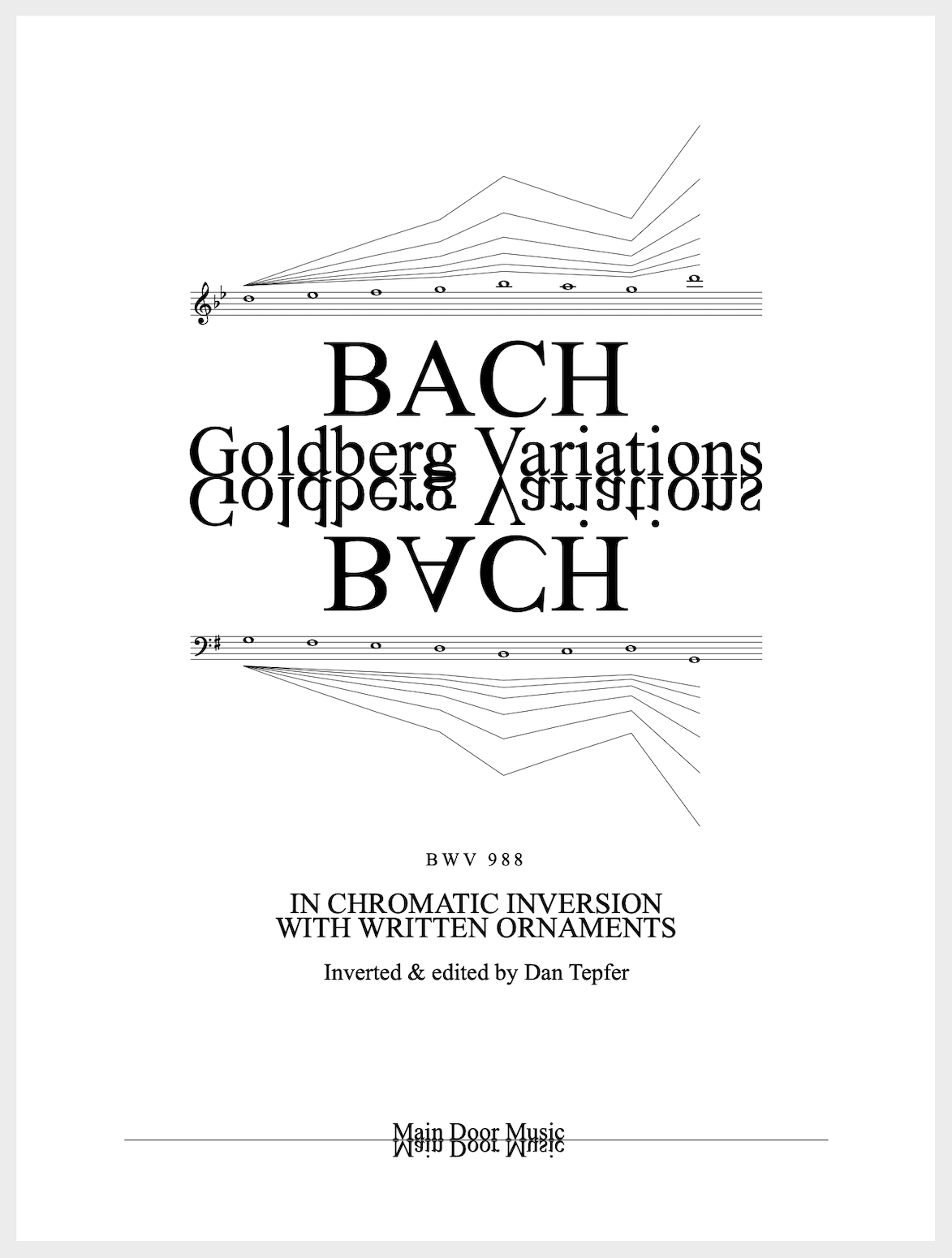
My first project of the 2020/21 pandemic was something I called #BachUpsideDown, an exploration of the sound of Bach’s music in chromatic inversion. During the early months of lockdown, I recorded myself performing the Goldberg Variations as written, and after each variation, I triggered a program I’d written on my computer that played back the notes I’d just performed upside-down. I fell in love with the strange and wonderful sound that results from this process, and decided to make a score so that other musicians could perform the music without the need for special technology. What follows is my introduction to the print edition, which is available for purchase here. You’ll find the YouTube playlist with all 30 variations here, and a May 2020 New York Times feature by Anthony Tommasini here.

Introduction to the print edition

What follows is the entirety of Bach’s Goldberg Variations, published in 1741 under the title Aria mit verschiedenen Veränderungen, but with a transformation: every note of the original text has been chromatically inverted about the E/F axis. In addition, the ornaments that appear in the original as symbols have been written out. 

What does this mean? Inversion is an age-old musical process in which musical material is turned upside-down, similarly to the reflected text on the title page of this edition. It does not mean that the music is played backwards, which is a different process called retrograde. With inversion, the arrow of time still points forward, but any motion upwards is reflected to a motion downwards, and vice-versa. 

Continue reading
Posted in Music | 4 Comments

Ruben the Squirrel & the Boston Marathon bombing

Something extraordinary happened to me in the spring of 2013. I found a squirrel. Or rather, the squirrel found me. It’s not all that uncommon, it turns out, but it sure felt special at the time. 

It all started on April 16th. In the afternoon, I biked to pianist Simone Dinnerstein’s house, in Park Slope, to play some of Bach’s Goldberg Variations for her. She generously shared her insights into the piece, and I came away feeling inspired. It was a gorgeous day. I took the most direct route home afterwards, through Prospect Park, on my bike. In the middle of the park, there’s a narrow, paved trail that cuts through the woods and connects the western and eastern sides. It rises from the Park Slope side, and then plunges steeply down to the Flatbush side. 

As I reached the top of the ridge, right before the descent, I spotted a small animal by the side of the trail. I was biking slowly, and the strange thing was that as I approached, the animal — a squirrel, I could see now — didn’t run away. It almost seemed to come towards me. I put my bike down. As I approached on foot, it looked up at me and took a shy step in my direction. I couldn’t believe it. I slowly put my hand down to touch it, and it didn’t budge, instead looking up at me with huge eyes, eyes that belonged to a very young squirrel. 

Continue reading
Posted in Personal History | 28 Comments

Lee Konitz, 1927 – 2020

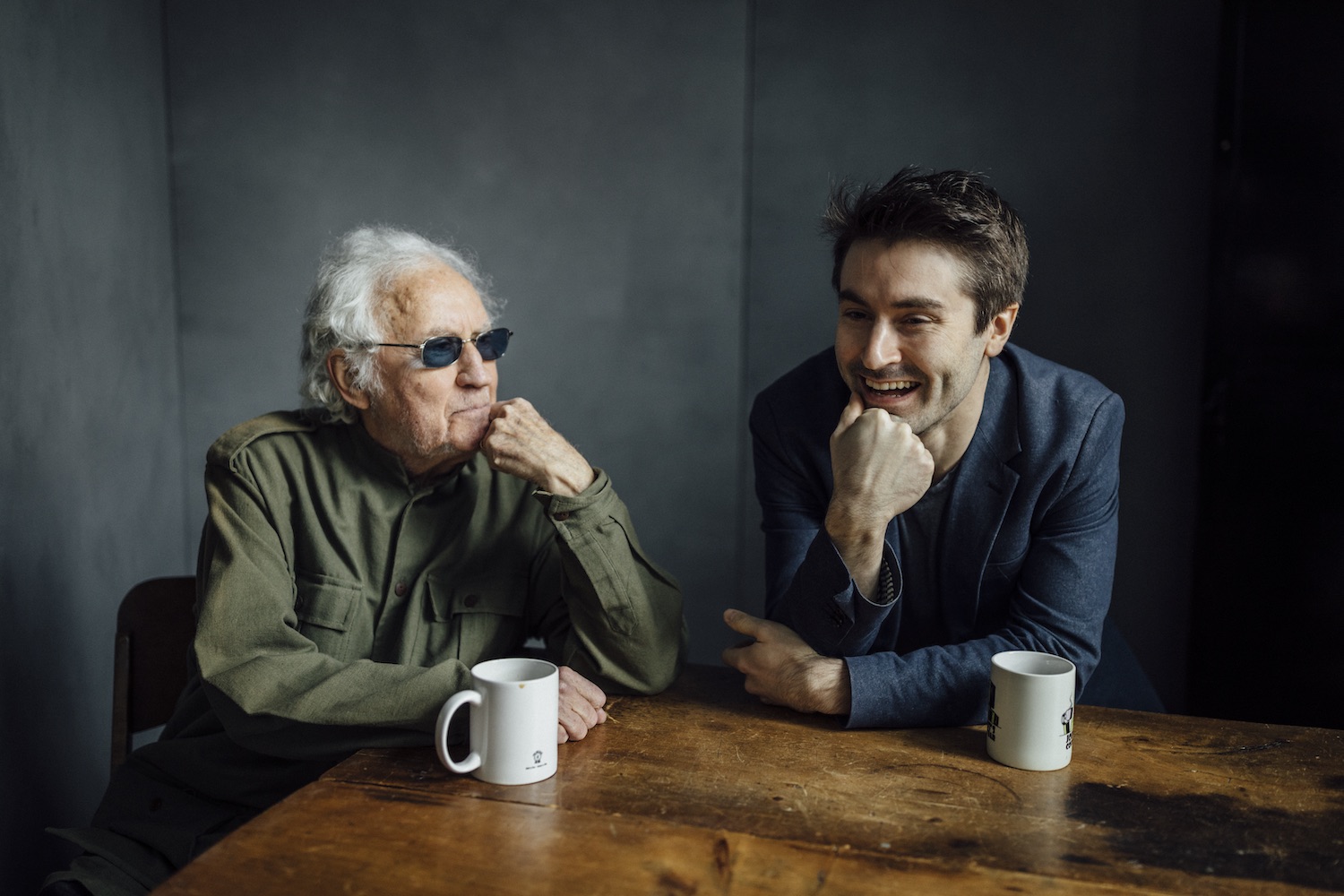
Thanks to JazzTimes for inviting me to write this memoriam. It appeared in their March 2021 issue commemorating lives lost to the pandemic. The photographs are by Josh Goleman, originally taken for our 2018 duo album on Verve, “Decade”.

As someone who likes to think of himself as rational, I can’t bring myself to believe in fate, yet Lee and I seemed destined to meet. Although piano’s been my instrument since I was a child, I had a sax in my teens, and I sound strangely like Lee on home recordings from the time even though I’d hardly listened to him. After I moved to New York in 2006, I put on my mentor Martial Solal’s duo record with Lee one day, Star Eyes, and, moved by a conviction I’ve seldom had before or since — that if I got to play with Lee, I would know what to do — I asked Martial if he would introduce us. Martial gave me his blessing, I went to Lee’s apartment on the Upper West Side, we hit it off immediately on both a personal and musical level, and thus began fourteen years of close friendship and collaboration.

Continue reading
Posted in Music, Personal History | 7 Comments

A Few Things I’ve Learned About Livestreaming

“Thanks” to the pandemic, I’ve spent much more time figuring out how to deal with video and live streaming than I ever thought I would. It’s turned out to be a surprisingly rewarding experience. In no particular order, here are some things I’ve learned along the way.

29.97 vs 30

For historical reasons (i.e. for reasons that probably could have been better dealt with at the time but were instead swept under the rug, having to do with the switch from B&W TV to color), for these purely historical reasons, in the parts of the world that use the NTSC standard, including North America, footage is recorded and played back (on TV at least) not at 30 frames per second (fps) but at an incredibly arcane 29.97 fps. This would be okay if that were always the case.

Continue reading
Posted in Music, Science | 23 Comments

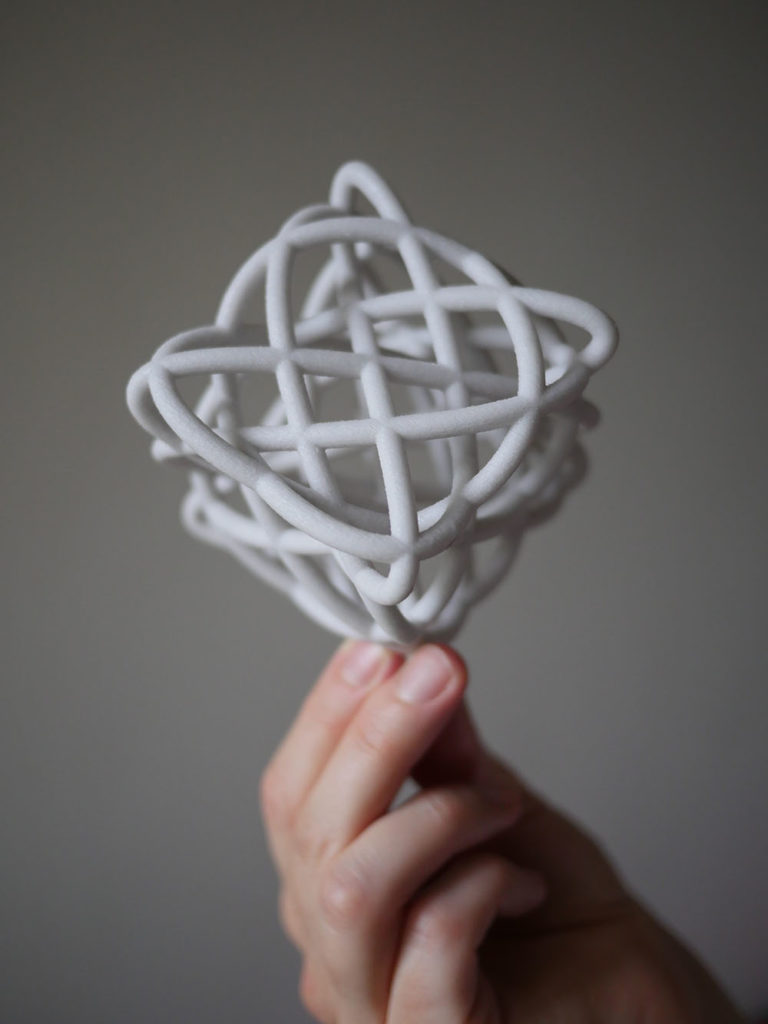
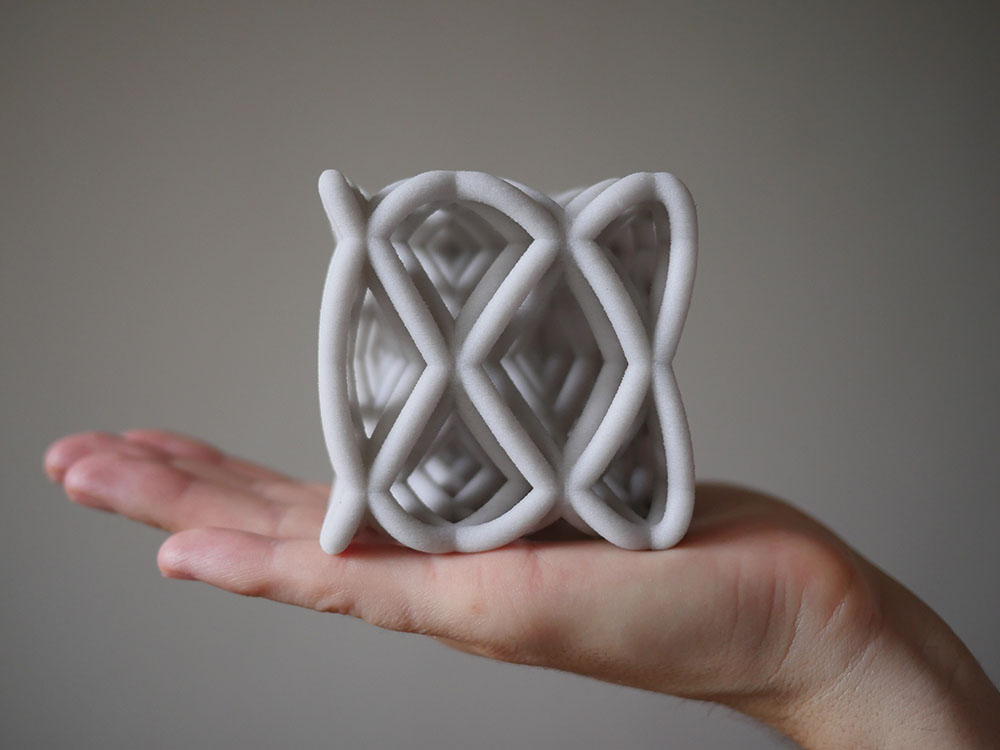
TriadSculpture for sale

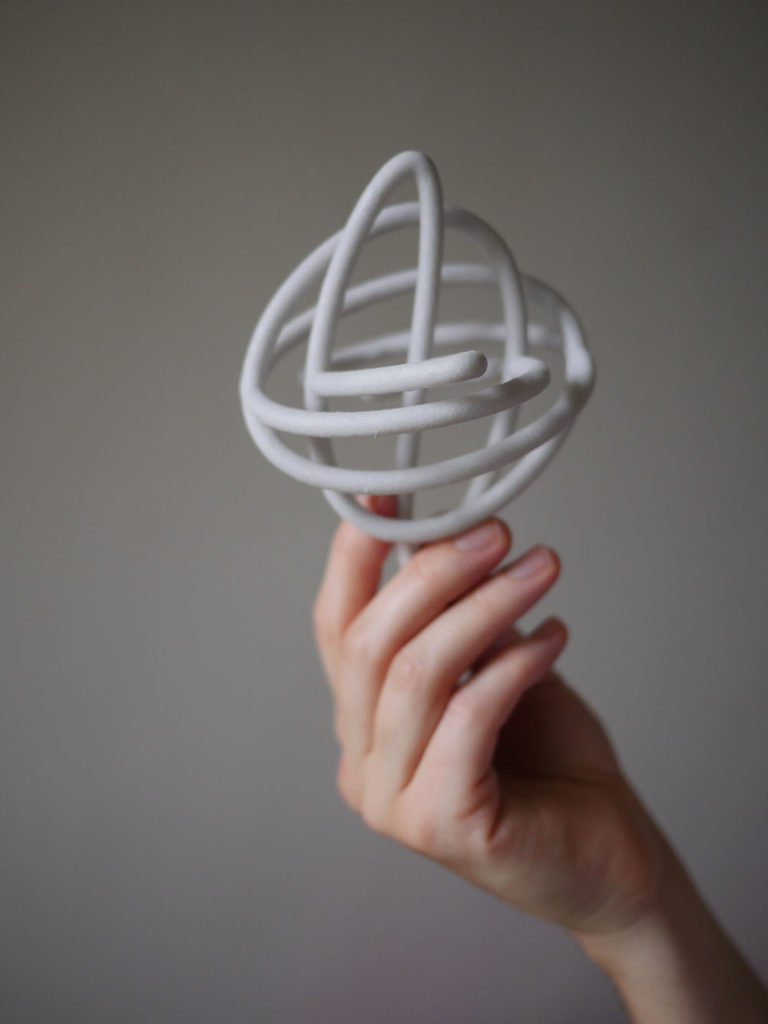
At long last, I’m now offering my triad sculptures — the ones that I created while developing my Natural Machines project — for sale.

Here’s the Major Triad (ratios 4:5:6) in natural sandstone:

And here’s the Minor Triad, ratios 10:12:15 in the same material:

They will be 3-D printed on demand for you and can be ordered at my Shapeways.com shop, right here.

Augmented and Diminished triads are coming soon! Here’s a sneak peek at the augmented…

Posted in Science | 4 Comments

Negative Harmony: a primer

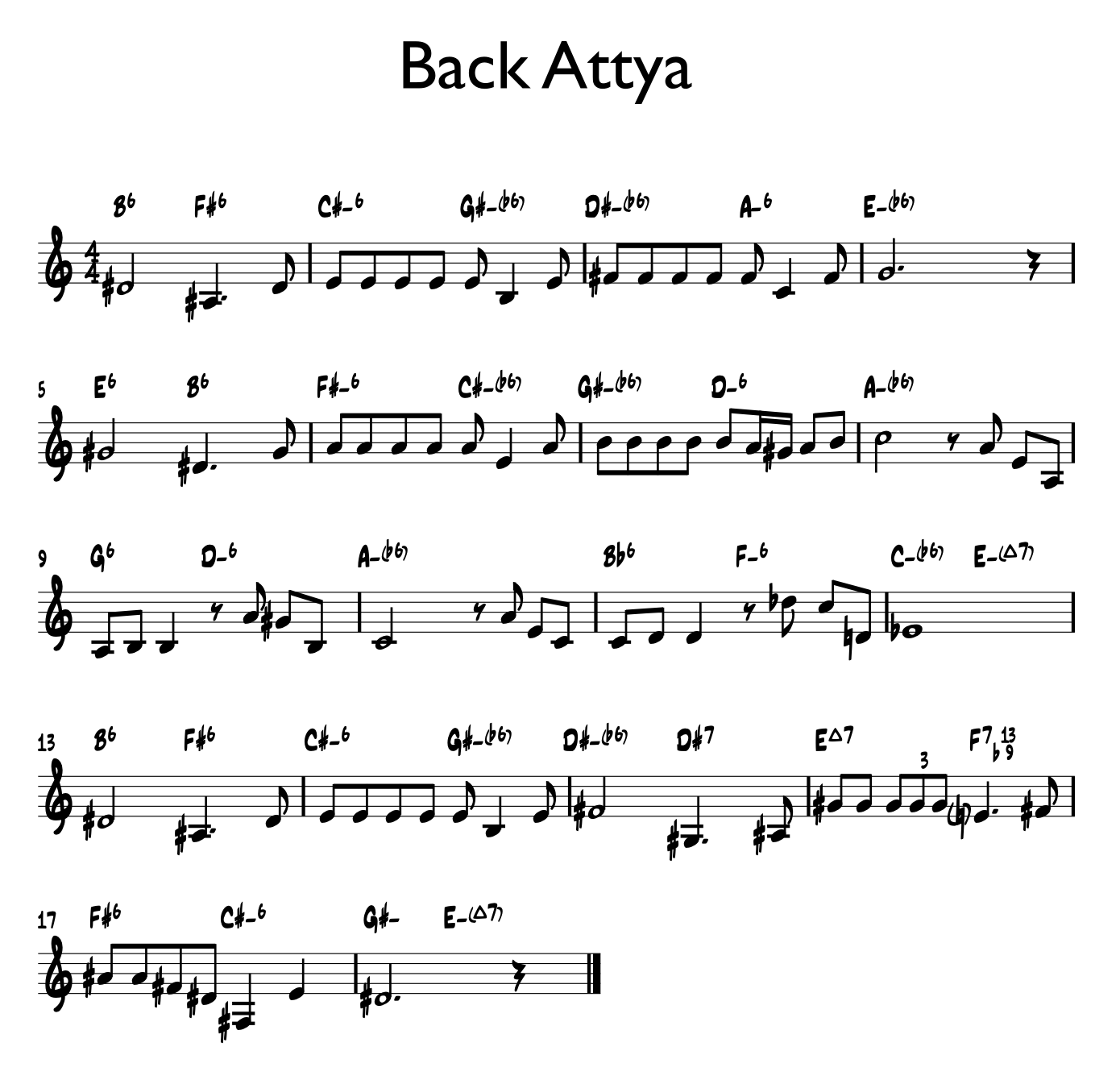
Ever since Five Pedals Deep, my trio record with Thomas Morgan and Ted Poor, came out in 2010, I’ve gotten a steady trickle of emails asking about a particular tune on it called Back Attya.

If you listen to it without knowing what it is, there’s something about the harmonic movement that might feel surprising. You can feel intuitively that it has a really solid structure, but at the same time, the chords don’t seem to move in a way that you would expect. There’s a reason for that: Back Attya, as the name cryptically suggests (ATTYA being an acronym), is an inversion of All The Things You Are, by Jerome Kern. Continue reading

Posted in Music | 32 Comments

McCoy Tyner: dance, drums, beauty salons & fourths

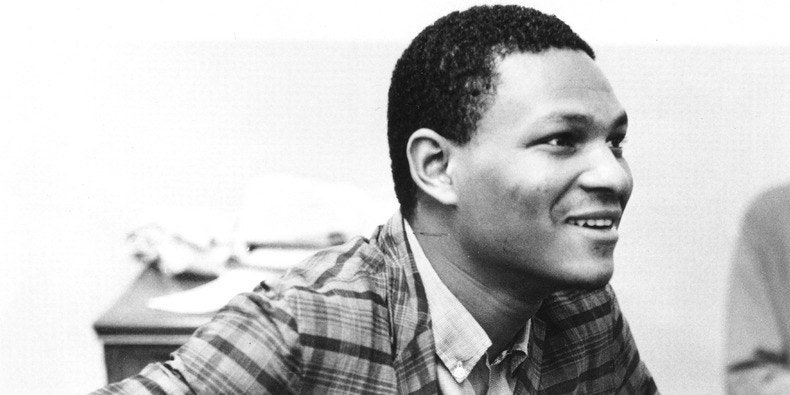
The great McCoy Tyner, giant of jazz, huge influence on me and countless others, died a week ago, on March 6th 2020. Back in 2008, when I was 26, I had the privilege of interviewing him for French magazine Jazzman ahead of the release of his album Guitars. Now seems like an apt time to share the interview below, which — aside from the translated and much condensed version that appeared in the magazine at the time — has never been published. Thanks to then editor-in-chief Alex Dutilh for trusting my young self with this assignment and giving me the opportunity to talk to one of my heroes.

Dan Tepfer: Hi, McCoy. I should start by telling you that I’m a pianist. I’ve been playing with Lee Konitz for a few years now. It’s been very special for me to find myself on the bandstand with someone I’ve listened to since I was a teenager. Likewise, it’s very special for me to get to talk to you now, because I’ve been listening to you since I was a kid.

McCoy Tyner: Yeah, well, it’s the same for me. I’m happy to meet you young guys on the scene, and when they say ‘well look, I’ve been listening to you for a long time’, I never think about how old I am, but I think ‘wow, that’s good that I helped somebody’ or ‘my presence has a meaning’, you know. That kind of thing makes me feel good — I have a purpose in life. 

Continue reading
Posted in Music | Tagged , | 2 Comments

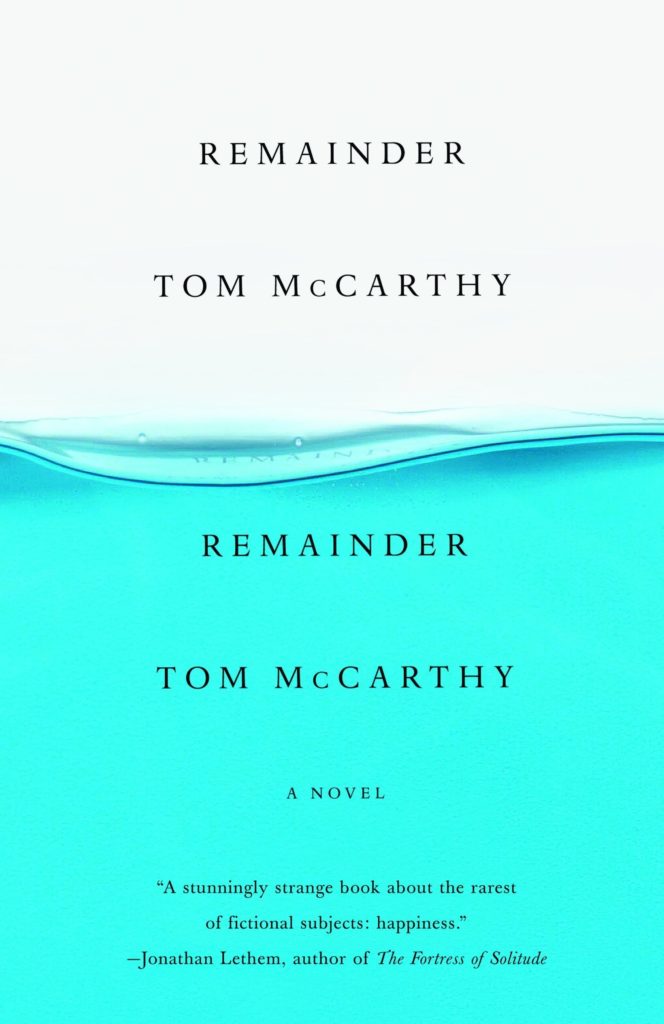
Creativity and Its Sources / Tom McCarthy’s Remainder

Reading Tom McCarthy’s novel Remainder, which I love, I’m reminded of a realization I had a while ago: pure creativity is closely related to dreams — a mysterious place where new visions are somehow born. You dream, and you see something, and metaphorically speaking — because “dreams” can be taken to represent any information that comes from the unconscious mind — your conscious job as an artist is to reproduce this vision in real life as faithfully as possible.

These “dreams” could take the shape of memories (as they do in the novel) or ideas which suddenly (and perhaps inexplicably) seem important. While reading John Krakauer’s Under the Banner of Heaven earlier this year, I was struck by the fact that the Mormon fundamentalists he writes about seemed to be receiving messages and visions from a source remarkably similar to my own as an artist: they would close their eyes and listen inside. The only major difference is that they attributed this new information to a source outside of themselves: God. To me, because I am merely making art, the source of the message is secondary: what matters is that it’s personal, and that I like it. To them, the identity of the source is paramount: if it’s from God, a murder can be justified; if it’s from the realm of dreams, they are merely delusional killers.

Continue reading
Posted in Books, Music | 2 Comments

Sister Canons in the Goldberg Variations

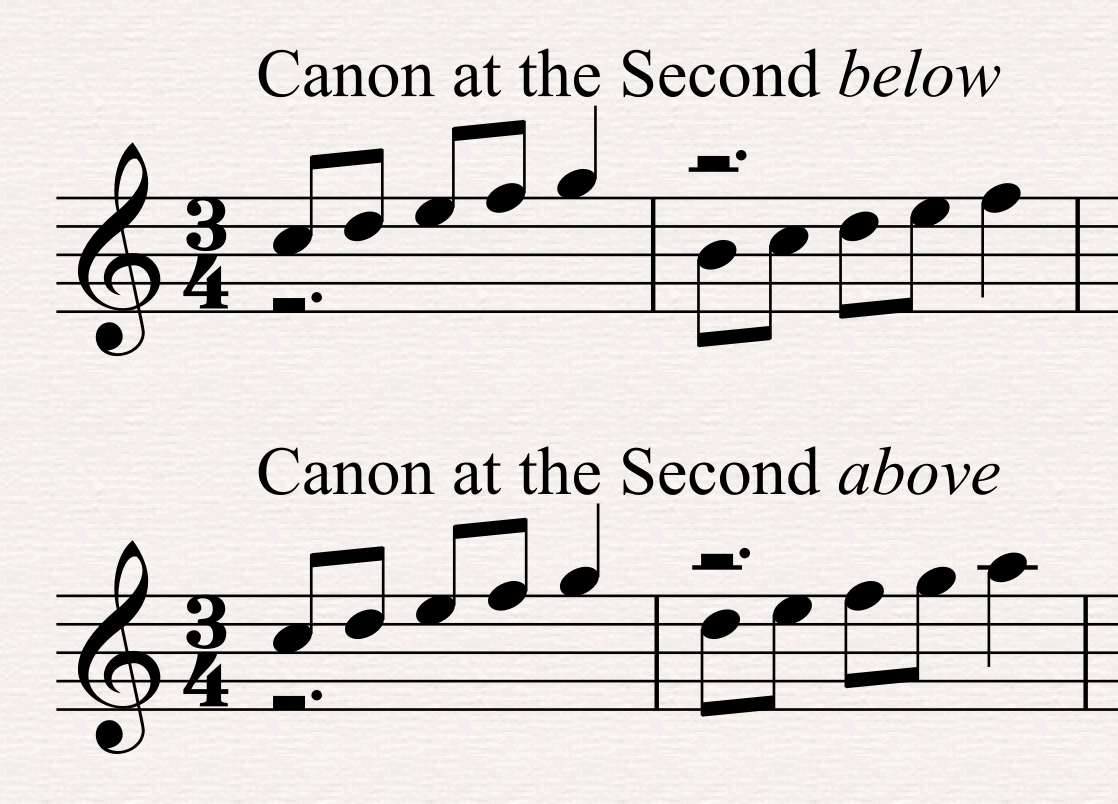
In Bach’s Goldberg Variations, every third variation is a canon at an increasing interval. The first (Variation 3) is at the unison (the canonic voice repeats the leading voice verbatim), the second (Variation 6) is at the second (the response repeats the subject a diatonic second away), and so on until Variation 27, which is a canon at the ninth. (Variation 30, the last of the set, where you would expect a canon at the tenth, is instead a Quodlibet).

But this leaves a question: what direction does the interval in each of the canons go? If Bach writes a “Canon at the Second,” there’s some crucial information missing, isn’t there? Is it a second above? Or below?

One might expect that Bach settled on one direction, and that all of his canons are at increasing intervals above, or below. This isn’t the case. The direction of the canons, in fact, keeps changing, and seems to be an important structural component of the Goldbergs. This is something I’ve been fascinated by for a while, and I haven’t seen it discussed anywhere else before. Let’s take a look: Continue reading

Posted in Music | Tagged , , | 4 Comments

The question, when performing

The question, when performing, is:

“Am I putting up with anything right now? Is there something that I’m unhappy with that I haven’t addressed?”

For example, awkward posture, which looks uncomfortable, will make the audience uncomfortable too, because it shows the performer to be someone who is putting up with something rather than doing something about it. We want to see someone who is at peace, from head to toe.

Posted in Music | 9 Comments

A Container for Nothingness

Two of my favorite jokes rarely get any laughs. I learned them both as a kid growing up in France. The first goes:

Why do Belgians sleep with two water glasses by their bed, one full and one empty?

One is in case they wake up in the middle of the night feeling thirsty. The other is in case they wake up in the middle of the night not feeling thirsty.

Of the two, this is the one that usually gets at least a chuckle. The second is dirtier, but is almost guaranteed to get no laughs at all: Continue reading

Posted in Uncategorized | Tagged , | 6 Comments

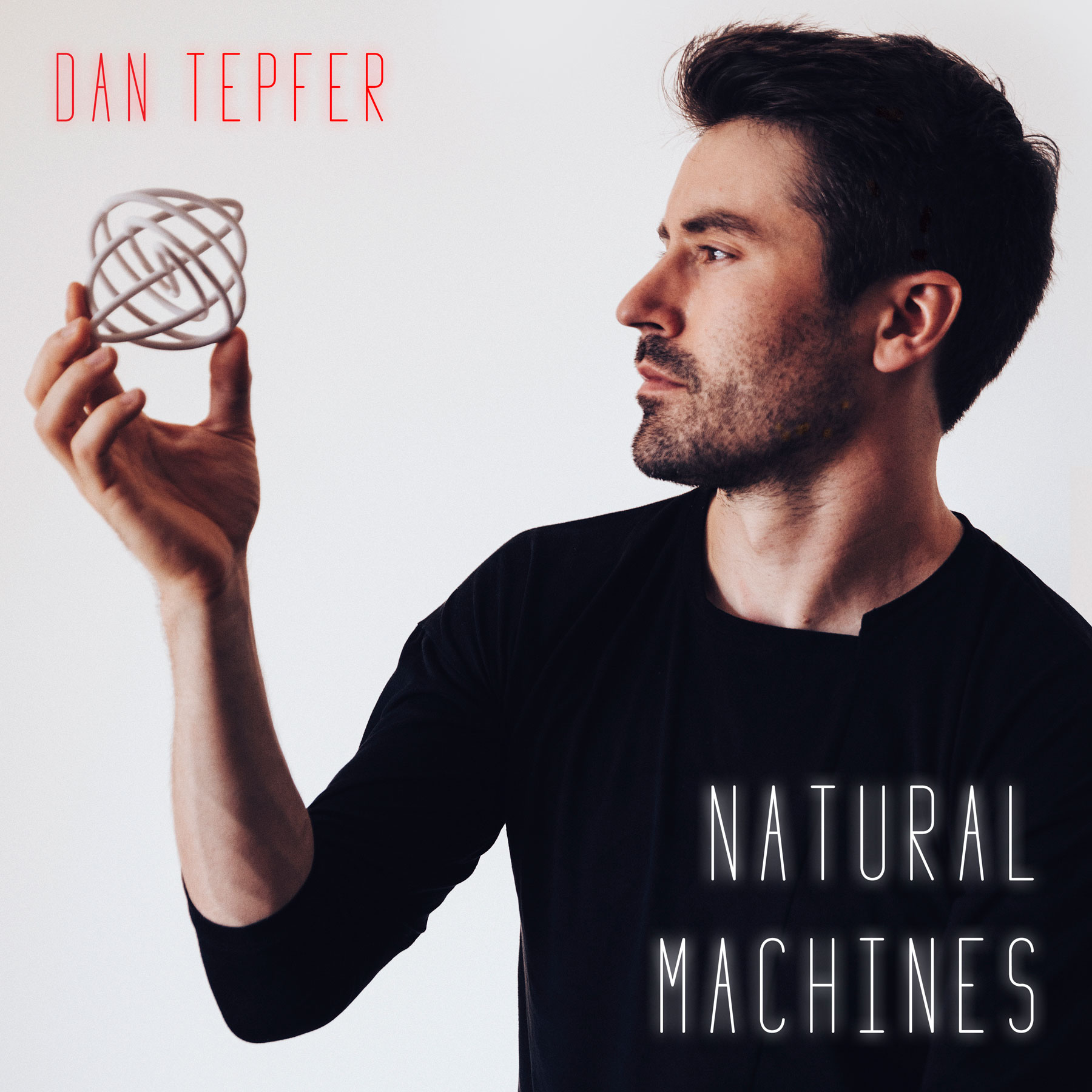
Natural Machines


The Natural Machines album is out today, Saturday October 27th. I’m bringing the project to Le Poisson Rouge in New York on October 30th. The fine folks there asked me some smart questions ahead of the gig. Thanks to John Ruscher for asking me to do this interview. Continue reading

Posted in Music | 13 Comments

Short songs with absurdly long codas

Form-wise, the Beatles’ Hey Jude is unusual. For 3 minutes and 8 seconds, it’s a conventional song, with melody, varying harmony, A and B sections that repeat in a predictable pattern — what you’d expect from a pop song. Then, for the remaining 3 minutes and 57 seconds, it’s something else entirely, a long vamp where the same static chord sequence repeats over and over again while the melody repeats with small variations and interjections. The proportion of these two parts feels like a bold move — there’s something about the length of the coda in relation to the body of the song that makes you question whether you just listened to a song or to… something else. Are we being tested? Are the Beatles daring us to walk away? If “art is what you can get away with” (Andy Warhol), are the Beatles pushing the limits? Continue reading

Posted in Music | Tagged , , | 20 Comments

The TRAPPIST-1 System: Listening to Planetary Orbits

(Cross-posted from WBGO.org. Thanks to Nate Chinen for inviting me to write this.)

With most things, I’ve found, what’s most interesting isn’t the thing in itself, but rather how it relates to other things. In other words, everything is relative, which is why I was so excited to see the video below. It shows, using harmony, rhythm and visuals, the relationships between the orbits of the seven planets around TRAPPIST-1, a dwarf star about 40 light years away from us.

Continue reading

Posted in Music, Science | 5 Comments

Vancouver

img_3541 Continue reading

Posted in Images | 2 Comments

Interview: Improvisation, Mountain Climbing & the Meaning of Life

I’ve got a little time off from touring so I’m cleaning house. While sorting through old papers I came across the interview below. Most of these answers still ring true to me today. It’s fun to hear from past iterations of oneself, sometimes.

Dan Tepfer interviewed by Gary Heimbauer
Jazz Inside Magazine, January 2010

Jazz Inside: Can you talk about how your unique childhood/young adulthood might have influenced your voice as a musician? You were born in Paris, France to American parents, got a degree in astrophysics in Edinburgh, Scotland and then moved here.

Dan Tepfer: I grew up in a way that doesn’t really give me any choice but to see the outside view, to see music as a pluralist art form. My grandfather was a jazz pianist on the West Coast. As a matter of fact, Nancy King, Ralph Towner and Glen Moore credit him with getting them into jazz. My mom is an opera singer. So I grew up hearing a lot of music, mainly jazz and classical, from before I was even born. I studied classical piano at one of the Paris conservatories through my childhood and teens, but somehow I always mainly considered myself an improviser. Continue reading

Posted in Music | 1 Comment

Birdman! Absurdity, theater, music & the importance of madness

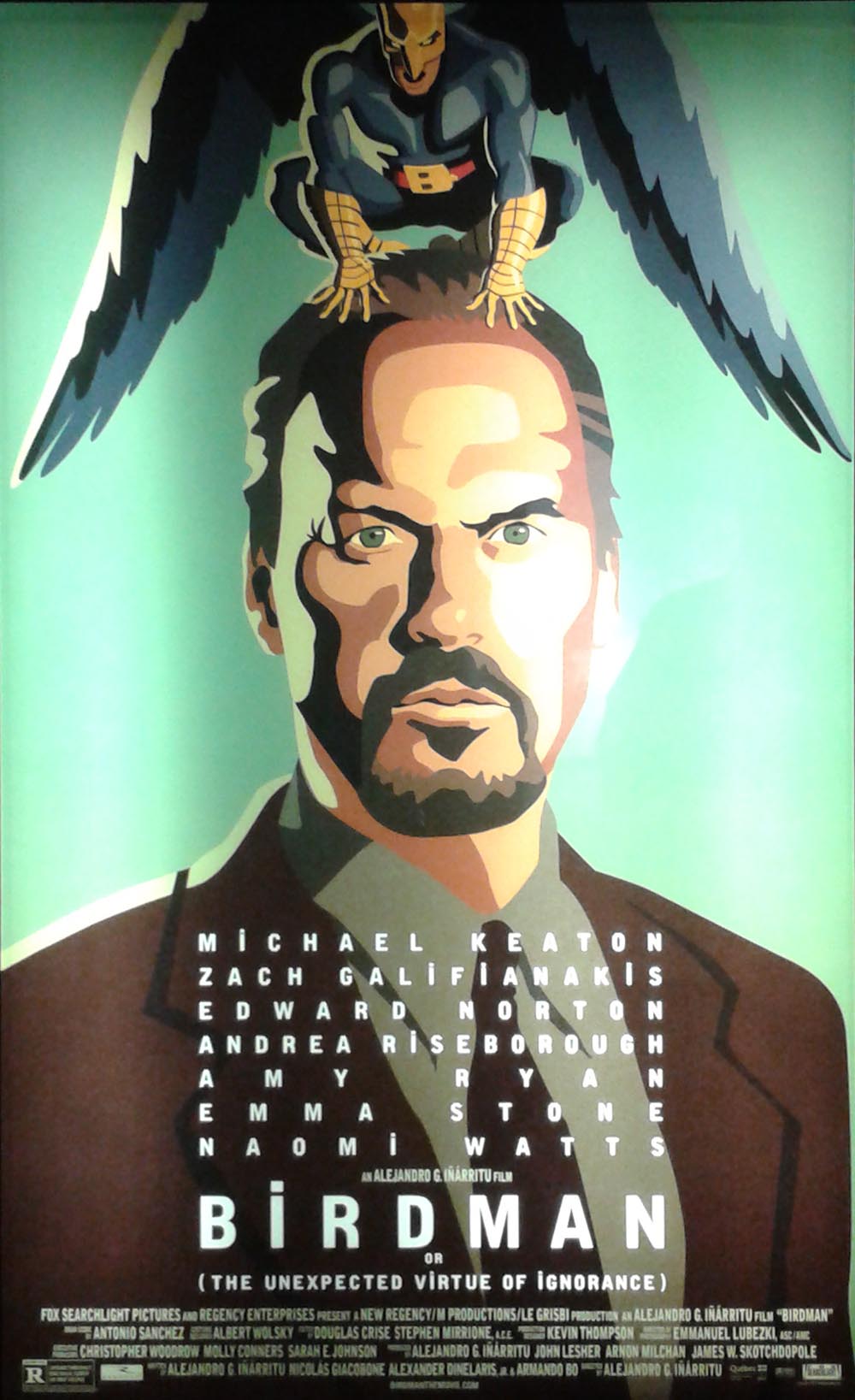
birdman-1000I left the movie theater last night, post-Birdman, intensely moved. Rarely has a film gotten to me so directly. Birdman is a wacky movie that seems to be asking a serious question: why live? What keeps us trucking on and floundering and trying as hard as we can to accomplish things, when we’re only specks of dust on a small rock orbiting around an average star, one of billions in a galaxy that itself is one of billions in the universe? How can you explain that we care so deeply about our shit? Our little troubles and tribulations? The movie has a simple answer: madness. That’s what explains it. And the beauty of it all is that madness is at once a curse and a necessity, without which, well, we might as well throw in the towel. Continue reading

Posted in Movies | Tagged , , , | 3 Comments

Doing It Bachwards: my unexpected Goldberg Variations

(Cross-posted from UCLA’s Ethnomusicological Review. Thanks to AJ Kluth for inviting me to write this piece for the journal.)

As I look back over the last ten years and the peculiar journey with J.S. Bach that the time represents for me, it’s sometimes hard to believe that I’m here, now, playing the Goldberg Variations from memory in their entirety, for sometimes sizeable audiences, well enough apparently to get enthusiastic approval from the classical section of the New York Times. I’m really a jazz pianist, after all, and the Goldbergs are hard. And the crazy thing is that I never set out to do this in the first place. How did I get here? The best answer I can give, to echo an experience many musicians have reported through the years, is that Bach taught me. Continue reading

Posted in Music | Tagged , , , , | 19 Comments

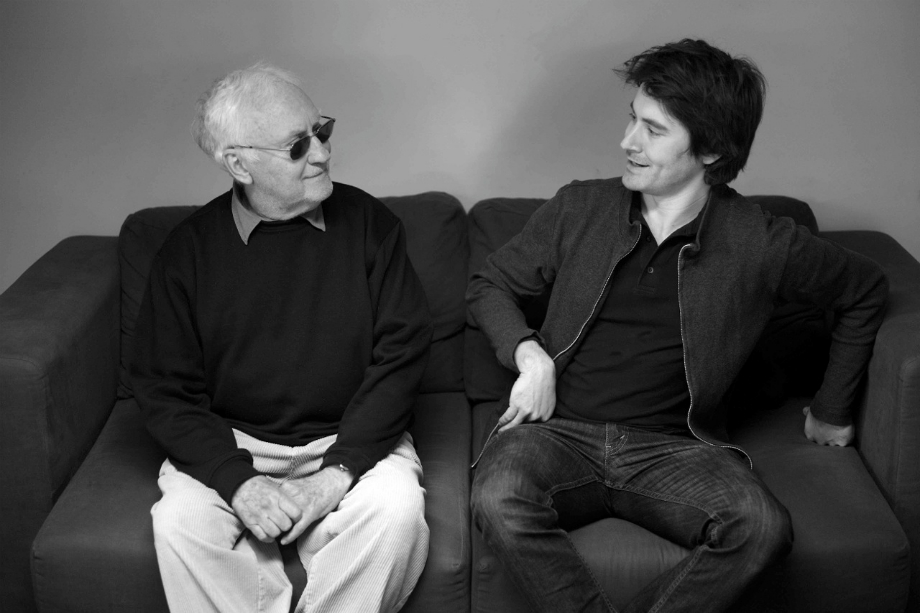
Lee Konitz on Spontaneity, Originality, Drugs & Playing Sharp

Lee and Dan

Lee Konitz will be turning 87 in October, and his long and distinguished career as one of the most singular saxophonists in jazz needs no introduction (but if you need one, it’s here). He is known in particular for his intense focus on improvisational integrity, a desire for each musical choice to reflect the present moment as much as possible instead of a pre-made plan or habit.

It’s easy to overlook how radical this position is. In many other styles of music, from classical to pop, the goal in live performance is the opposite: to reproduce a carefully thought-out plan as faithfully as possible. Even in jazz, it’s not uncommon for groups to take a hybrid approach where a good portion of the material, even outside of written sections, is predetermined. Despite all this, Lee has somehow stubbornly insisted on showing up to his concerts prepared to be unprepared, and has (mostly) delighted audiences in doing so. Continue reading

Posted in Music | Tagged , | 11 Comments

The New Logic, Objectification, & Bob Dylan

When I got back home to Brooklyn from tour a couple days ago, one of the things I did was buy Logic Pro X, a big update to a music production app I’ve used for a long time. To get a handle on it, I decided to make a track for a friend of mine. Earlier in the day I’d come across Bob Dylan’s All I Really Want To Do again, which, I was reminded, has got to be one of the most wonderfully simple and profound songs there is, and I thought it would do just fine.

I started hunting around the program for sounds. One of the big additions to Logic is that it now comes with a huge sample library. I focused on the orchestral samples, because I’ve never seriously tried to make a computer sound like a real orchestra before. The music I’ve made so far with sequencers, like my recent score for the film Movement & Location, is what we’d call electronic music: it purposely sounds machine-generated. There are people out there, particularly film composers, who are great at drawing acoustic-sounding music out of a computer, but it’s not a skill I’ve worked on before.

Logic now also has an advanced arpeggiator, which is something that was (amazingly) lacking in the old version — there were workarounds, but they weren’t pretty. In this context, arpeggiation means making melodies out of the notes in a chord by playing them sequentially instead of playing them all at once. Combine arpeggiation and some string samples, hold down a chord, and you might get something like this:


Continue reading

Posted in Music | 5 Comments

Rhythm / Pitch Duality: hear rhythm become pitch before your ears

I just got home from a five-week tour in Europe and finally have some time to do what I call research. The way I see it, being a touring musician is a bit like being a scientist: you spend a bunch of time in the lab, and you find something that you’re excited about; then you have to go out and give a bunch of seminars to tell the world about it. But very soon you’re itching to get back to the lab, because you want to discover the next thing. So here I am, at home and doing research, which for me, right now, in between practicing piano and writing tunes, means getting into a computer music programming environment called SuperCollider.

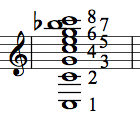
Yesterday I was fooling around with it and suddenly realized that with SuperCollider, I could do something I’d been wanting to do for years, which is to make a recording of rhythm becoming pitch, and back again. You see, rhythm and pitch are exactly the same thing, only at very different speeds. How’s that, you ask? Well, let’s start with the harmonic series:

harmonic_series

Continue reading

Posted in Music, Science | Tagged , | 120 Comments

Long Island

Continue reading

Posted in Images | Tagged , , | Leave a comment

Normandy

Continue reading

Posted in Images | Tagged , | 5 Comments

Algorithmic Art

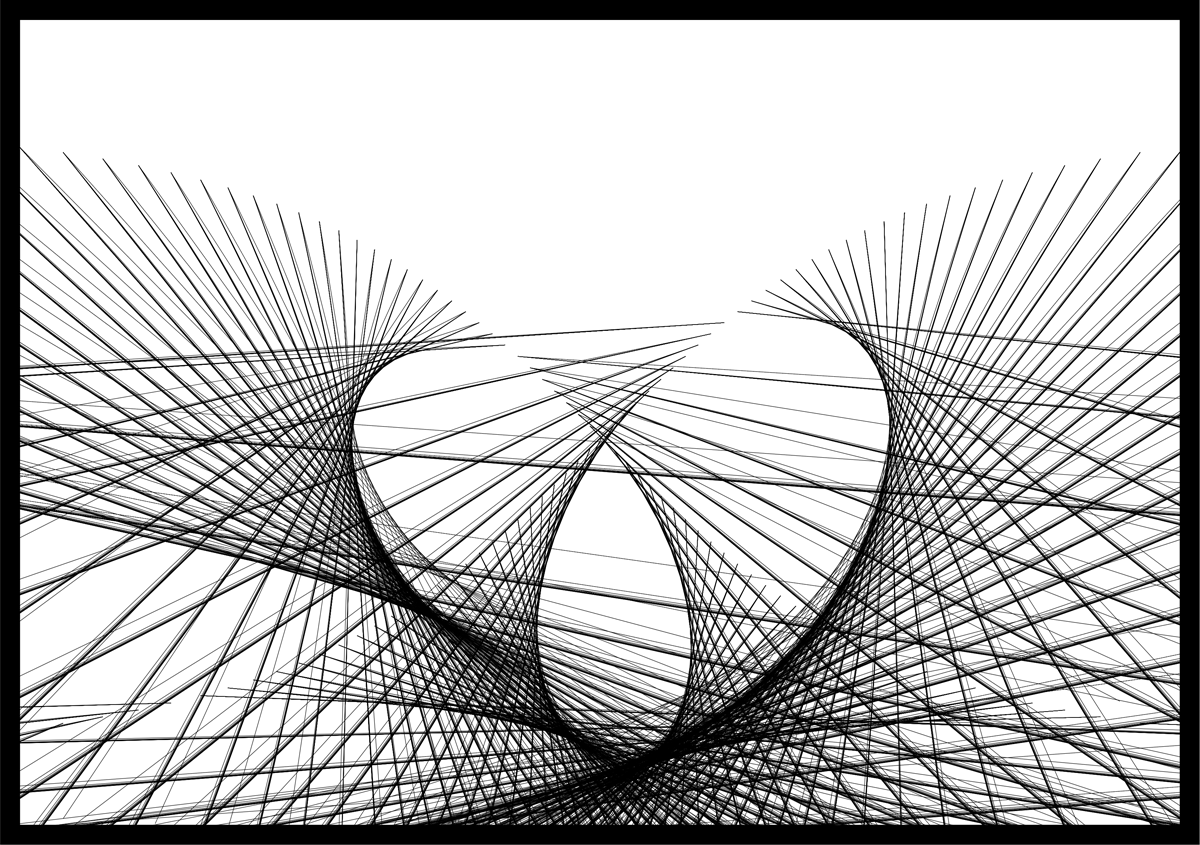
My dirty little secret is that I can be a pretty serious nerd sometimes. While I was procrastinating from writing a piece for nonet a few months ago, I reopened a computer program I had started working on in 1998 (!) and modified it so that it would work on my current Mac. The idea is pretty basic: use lines and a little math to make pretty pictures. Although I didn’t know it at the time, it’s an example of what’s called algorithmic art. I remember being totally fascinated by this as a teenager: I would try things, almost at random, and these incredible shapes would appear. Fourteen years later, with a couple tweaks to the program, I still think there’s something really special about these images.

1.

Continue reading

Posted in Images | Tagged , , | 11 Comments